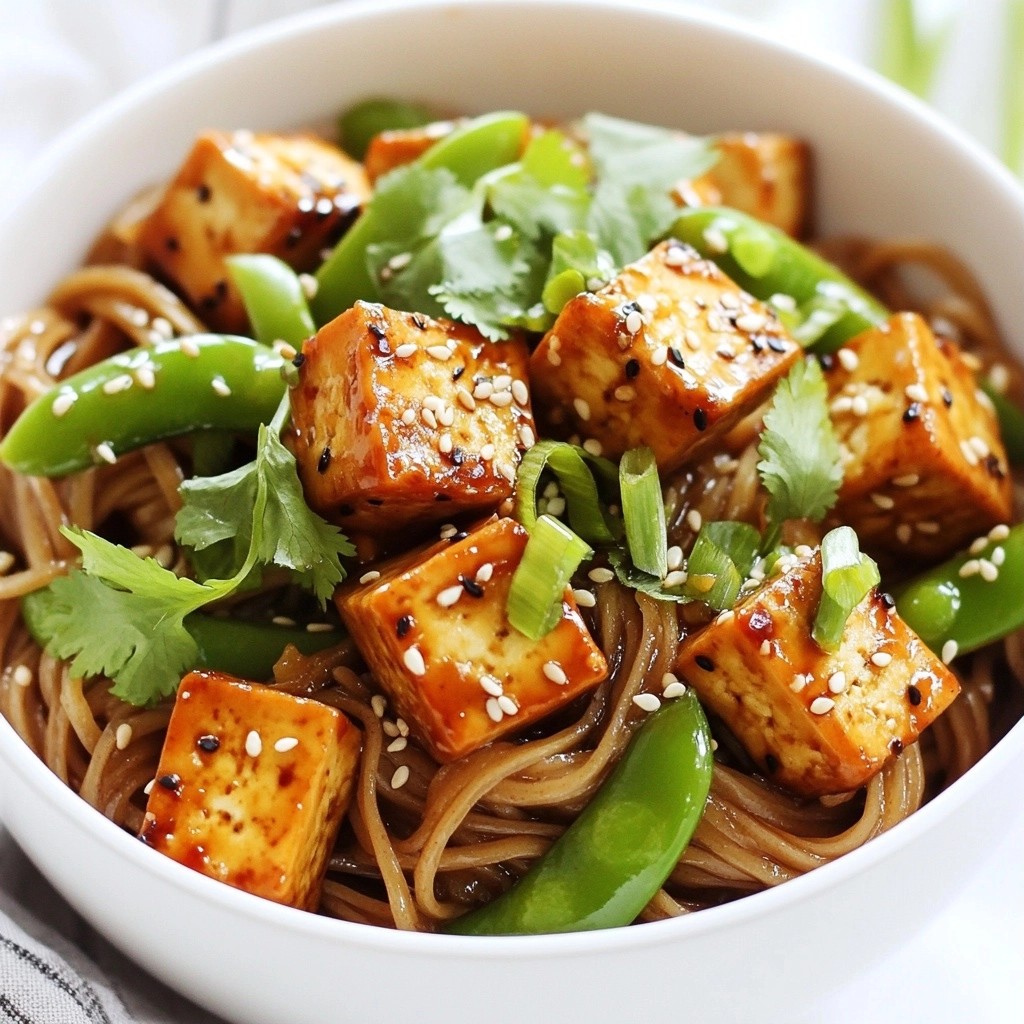
Looking for a tasty way to enjoy healthy noodles? You’re in for a treat! My Miso Glazed Tofu Soba combines rich flavors with fresh ingredients for a wholesome meal. I’ll guide you through each step, from selecting quality ingredients to perfecting the miso glaze. Plus, I’ll share tips and variations to make this dish your own. Get ready to delight your taste buds and nourish your body!
Why I Love This Recipe
- Flavorful Glaze: The combination of white miso, soy sauce, and maple syrup creates a deliciously rich and umami-packed glaze that elevates the tofu to new heights.
- Quick and Easy: With a total prep and cook time of just 30 minutes, this dish is perfect for busy weeknights when you want something healthy and satisfying.
- Nutritious Ingredients: Packed with plant-based protein from tofu and fiber from soba noodles and snap peas, this recipe is not only tasty but also nourishing.
- Customizable: You can easily swap in your favorite vegetables or adjust the glaze for different flavor profiles, making this dish versatile for various tastes.
Ingredients
List of Ingredients
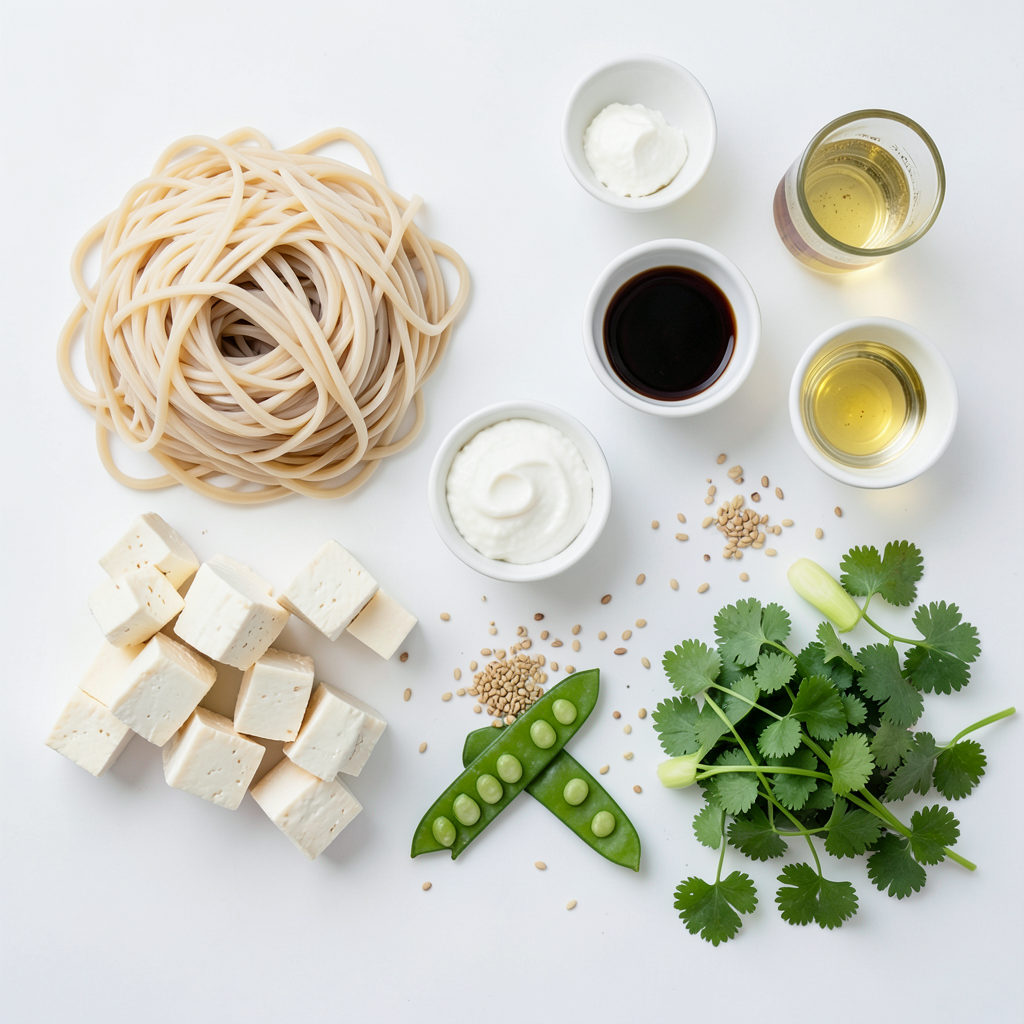
- 200g soba noodles
- 200g firm tofu, pressed and cut into cubes
- 3 tablespoons white miso paste
- 2 tablespoons low-sodium soy sauce
- 1 tablespoon maple syrup (or agave nectar)
- 1 tablespoon sesame oil (plus extra for cooking)
- 1 tablespoon rice vinegar
- 2 scallions, finely sliced
- 1 cup snap peas, trimmed
- 1 tablespoon toasted sesame seeds (for garnish)
- Fresh cilantro leaves (for garnish)
Health Benefits of Each Ingredient
- Soba Noodles: Packed with protein and fiber, soba noodles help keep you full. They also have a low glycemic index, which is great for energy.
- Firm Tofu: A great plant-based protein source, tofu contains all nine essential amino acids. It's also rich in calcium and iron.
- White Miso Paste: Miso adds depth and umami. It’s also rich in probiotics, which can support gut health.
- Low-Sodium Soy Sauce: It adds flavor without too much sodium. This helps keep blood pressure in check.
- Maple Syrup: A natural sweetener with antioxidants. It also provides minerals like manganese and zinc.
- Sesame Oil: This oil is high in healthy fats. It also contains antioxidants that can help reduce inflammation.
- Rice Vinegar: Low in calories, it adds tang without extra sugar. It can help with digestion.
- Scallions: These add flavor and are rich in vitamins A and K. They also have anti-inflammatory properties.
- Snap Peas: Low in calories, snap peas are packed with vitamins C and K. They also provide fiber for digestive health.
- Toasted Sesame Seeds: These have healthy fats and provide a nice crunch. They also contain calcium and magnesium.
- Fresh Cilantro: This herb adds flavor and is full of antioxidants. It can also support heart health.
Tips for Choosing Quality Ingredients
- Soba Noodles: Look for 100% buckwheat noodles. They have a better texture and flavor.
- Tofu: Choose firm or extra-firm tofu for a nice texture. Check the expiration date for freshness.
- Miso Paste: Select organic varieties if possible. Freshness affects the taste and health benefits.
- Soy Sauce: Look for low-sodium options to keep the dish heart-healthy.
- Maple Syrup: Choose pure maple syrup over imitation. It has more nutrients and flavor.
- Sesame Oil: Opt for toasted sesame oil for a stronger taste. It should smell nutty.
- Fresh Vegetables: Pick bright-colored snap peas and firm scallions. Freshness impacts taste and nutrition.
- Herbs: Use fresh cilantro for the best flavor. Look for vibrant, green leaves.
Step-by-Step Instructions
Cooking the Soba Noodles
To start, grab a large pot and fill it with water. Bring the water to a rolling boil. Add the soba noodles and cook them according to the package instructions, which takes about 4 to 6 minutes. Once they are done, drain the noodles in a colander. Rinse them under cold water to stop the cooking. This step keeps them from sticking together. Set the noodles aside for later.
Preparing the Miso Glaze
Next, take a medium-sized bowl. In this bowl, mix together 3 tablespoons of white miso paste, 2 tablespoons of low-sodium soy sauce, 1 tablespoon of maple syrup, 1 tablespoon of sesame oil, and 1 tablespoon of rice vinegar. Use a whisk to blend these ingredients until smooth. This glaze will add a rich flavor to your dish.
Cooking and Glazing the Tofu
Now, heat a splash of sesame oil in a large non-stick skillet over medium heat. Once hot, add 200 grams of cubed tofu. Sauté the tofu for about 5 to 7 minutes. Turn the pieces occasionally until they are golden brown on all sides. Once the tofu is crispy, lower the heat. Pour the miso glaze over the tofu. Gently stir to coat each piece. Let it cook for an additional 2 to 3 minutes. Stir occasionally until the glaze thickens.
Blanching the Snap Peas
While the tofu cooks, take a small pot and fill it with water. Bring the water to a boil. Add 1 cup of snap peas and blanch them for 1 to 2 minutes. They should turn vibrant green and stay tender-crisp. After that, drain the peas. Rinse them under cold water to stop the cooking process.
Combining and Garnishing the Dish
In a large serving bowl, combine the cooked soba noodles, glazed tofu, and blanched snap peas. Use tongs or two forks to toss everything together gently. This helps mix the flavors. For the final touch, top your dish with sliced scallions, toasted sesame seeds, and fresh cilantro leaves. Enjoy your healthy and tasty meal!
Tips & Tricks
Perfecting the Tofu Texture
Tofu can be tricky, but I have tips. Always press your tofu first. This step removes excess moisture, making it firmer. Cut it into bite-sized cubes for even cooking. When you sauté, use medium heat. This helps create a golden, crispy crust. Make sure to turn the tofu often. You want all sides to brown nicely.
Adjusting Miso Glaze to Taste
The glaze is key to this dish. Start with the basic mix: white miso paste, soy sauce, maple syrup, sesame oil, and rice vinegar. Taste it as you go. If you want it sweeter, add more maple syrup. For a saltier kick, add a bit more soy sauce. Each ingredient plays a role, so feel free to adjust until it suits your palate.
Common Mistakes to Avoid
Avoid these common mistakes for the best results. First, don’t overcrowd the pan when cooking tofu. This can lead to steaming instead of browning. Second, do not skip rinsing your soba noodles. This step prevents clumping. Lastly, don’t rush the glaze. Allow it to thicken and caramelize slightly. Patience here pays off with flavor.
Pro Tips
- Press the Tofu: Make sure to press the tofu for at least 30 minutes before cooking to eliminate excess moisture, allowing it to absorb the miso glaze better and achieve a crispy texture.
- Customize the Glaze: Feel free to adjust the sweetness of the miso glaze by adding more or less maple syrup according to your taste preference.
- Blanch Snap Peas: To keep snap peas vibrant and crunchy, blanch them for just 1-2 minutes and then immediately cool them under cold water.
- Serving Suggestions: This dish pairs wonderfully with a sprinkle of chili flakes or a drizzle of sriracha for those who enjoy a bit of heat!
Variations
Switching Up the Noodles
You can change the noodles in this dish. If you want a gluten-free option, try rice noodles. They cook quickly and soak up flavors well. You can also use whole wheat noodles for a heartier texture. Each noodle type gives a different taste and feel.
Adding More Vegetables
Adding more veggies boosts nutrition and flavor. Try bell peppers, carrots, or broccoli. You can also use bok choy or zucchini for a fresh crunch. Just sauté or blanch them as you did with the snap peas. Mix them into the dish for extra color and health benefits.
Vegan-Friendly Swaps
If you want a vegan dish, use maple syrup instead of honey. This recipe is already plant-based with tofu. You can also swap soy sauce for tamari if you need it gluten-free. Each change keeps the dish rich in flavor while meeting dietary needs.
Storage Info
How to Store Leftovers
To store leftovers, let your miso glazed tofu soba cool down first. Use an airtight container. This keeps moisture in and air out. Place the dish in the fridge. It stays fresh for up to three days.
Reheating Instructions
To reheat, take the noodles out of the fridge. You can use a microwave or a skillet. If using a microwave, cover the bowl. Heat for about one to two minutes. Stir halfway through to warm evenly. If using a skillet, add a splash of water. Heat over low to medium heat until hot.
Freezing the Dish
You can freeze miso glazed tofu soba, but fresh noodles work best. Place the cooled dish in a freezer-safe container. Seal tightly to prevent freezer burn. It can last up to a month. When ready to eat, thaw in the fridge overnight. Reheat as mentioned above for the best taste.
FAQs
What Can I Substitute for Miso Paste?
If you cannot find miso paste, you can use tahini. Mix tahini with a little soy sauce and vinegar. This will give you a similar flavor. Alternatively, try almond butter or sunflower seed butter for a unique taste.
How Do I Make this Recipe Gluten-Free?
To make this dish gluten-free, use gluten-free soba noodles. Look for brands made from 100% buckwheat. Also, choose gluten-free soy sauce or tamari instead of regular soy sauce.
Can I Use Different Proteins Instead of Tofu?
Yes, you can use other proteins. Grilled chicken, shrimp, or tempeh work well. Just cook them until they are done, then add the glaze as you would with tofu.
How Long Does Miso Glazed Tofu Last in the Fridge?
Miso glazed tofu lasts about 3-4 days in the fridge. Store it in an airtight container. Reheat it gently in a pan or microwave before serving.
This blog post covered key ingredients, their health benefits, and tips for choosing quality options. You learned step-by-step instructions for cooking soba noodles, preparing miso glaze, and making the dish. We discussed tofu tips, variations, and how to store leftovers. Remember, small changes can make a big difference. Experiment with flavors, adjust to your taste, and enjoy your meal. Following these steps will help you create a tasty, healthy dish that you can share with friends and family. Enjoy your culinary journey!