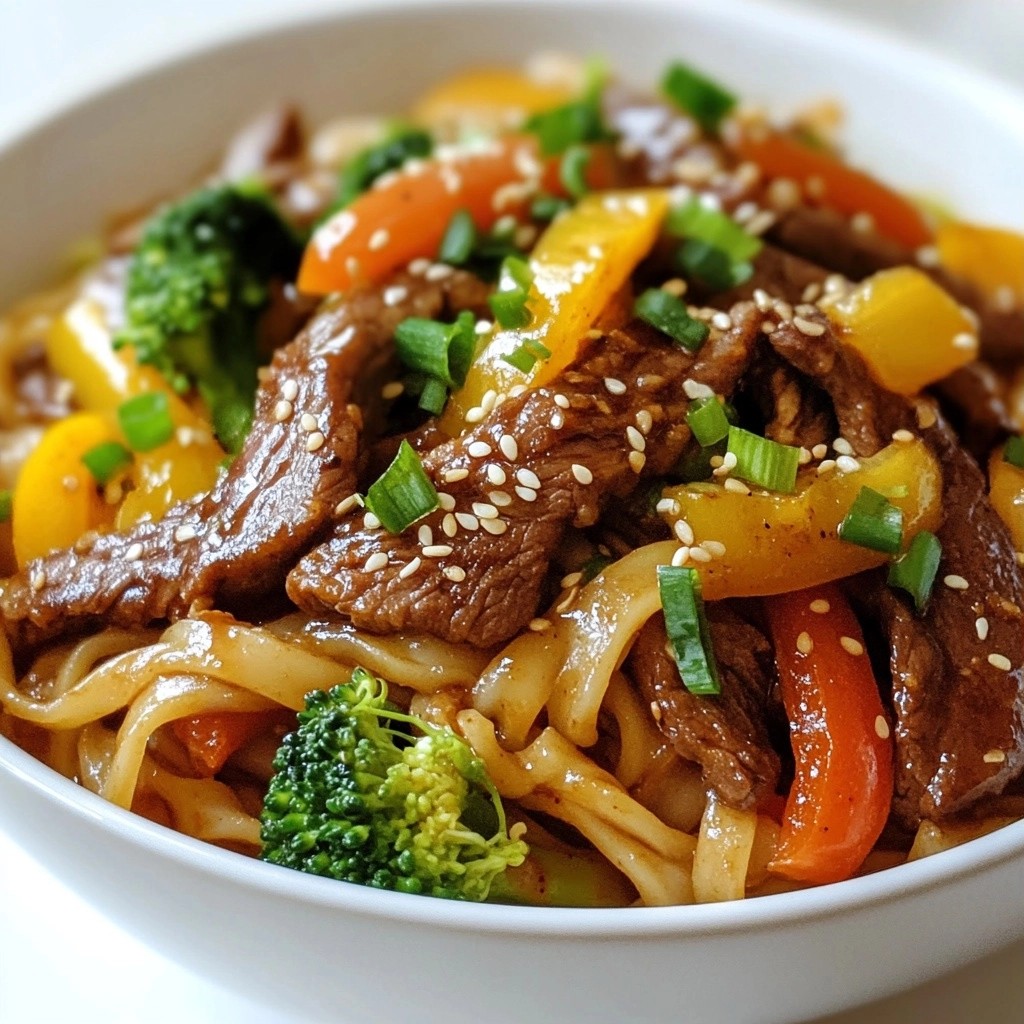
Craving a warm, hearty meal? You'll love these Korean BBQ Beef Noodles! This recipe combines tender beef, flavorful sauce, and perfectly cooked noodles for a delicious dish. I’ll guide you through each step, from marinating the beef to ensuring the noodles don’t stick. Whether you're a kitchen pro or just starting out, you'll find tips to make this meal a favorite. Ready to dive into this tasty journey? Let's get cooking!
Why I Love This Recipe
- Flavor Explosion: This dish combines the savory flavors of Korean BBQ with the freshness of vegetables, creating a delightful culinary experience.
- Quick and Easy: With a prep time of just 30 minutes, it's perfect for a weeknight dinner when you're short on time but still want something delicious.
- Customizable: You can easily swap out the vegetables or protein to suit your taste, making it a versatile option for any meal.
- Visually Appealing: The vibrant colors of the bell peppers and fresh cilantro make this dish not only tasty but also beautiful to serve.
Ingredients
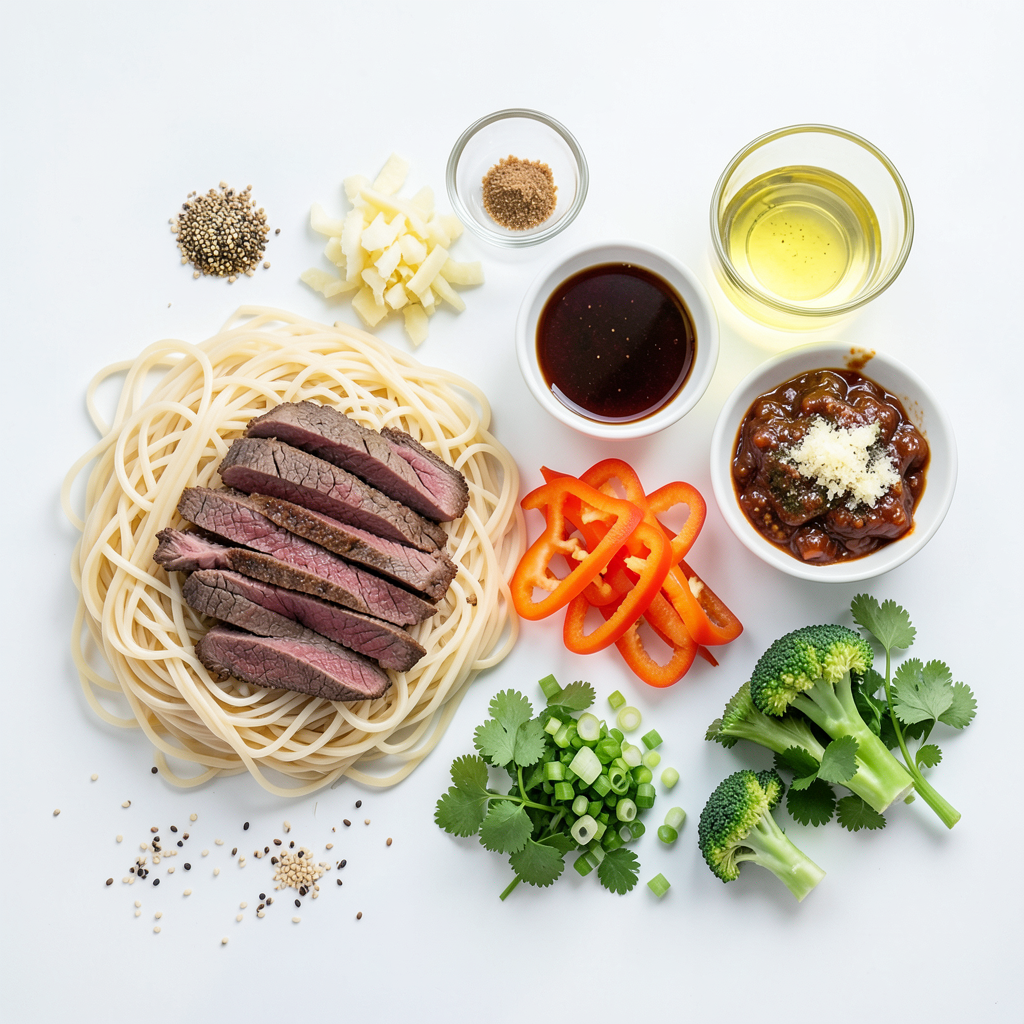
List of Ingredients
- 8 oz wide rice noodles
- 1 lb flank steak, thinly sliced against the grain
- 2 tablespoons soy sauce
- 1 tablespoon sesame oil
- 1 tablespoon brown sugar
- 2 cloves garlic, finely minced
- 1 inch fresh ginger, grated
- 1 tablespoon gochujang (Korean chili paste)
- 1 cup bell peppers, julienned (mix of colors for visual appeal)
- 1 cup broccoli florets
- 2 green onions, finely chopped
- 1 tablespoon vegetable oil
- Sesame seeds, for garnish
- Fresh cilantro, for garnish
For those who need alternatives, you can use tamari in place of soy sauce for a gluten-free option. If you can't find wide rice noodles, you can substitute with udon noodles or even egg noodles. For a vegetarian twist, swap the beef with tofu or tempeh. This way, you can customize the dish to suit your tastes while keeping the great flavors.
Step-by-Step Instructions
Marinating the Beef
Marinating beef is key for tasty meat. It helps the flavors soak in. Use a mix of soy sauce, sesame oil, brown sugar, garlic, ginger, and gochujang. Coat the beef well in the marinade. Cover the bowl and chill it in the fridge for at least 30 minutes. This time allows the beef to absorb all those great flavors. For extra taste, marinate it for up to two hours.
Cooking the Noodles
Start with a large pot of boiling water. Add the wide rice noodles and cook as directed on the package. They usually take just a few minutes to soften. Once they are tender, drain them. Rinse the noodles in cold water to stop cooking. This step keeps them firm and prevents sticking. Toss them with a bit of oil to help keep them separate.
Stir-Frying Vegetables and Beef
Heat vegetable oil in a big skillet or wok at medium-high heat. Add the julienned bell peppers and broccoli florets. Stir-fry them for 4-5 minutes. You want them to be tender but still crisp. Remove the veggies from the skillet and set them aside. Now, add the marinated beef to the same skillet. Cook it for about 3-4 minutes. Stir it often until the beef browns and cooks through.
Combining Ingredients
Return the cooked vegetables to the skillet with the beef. Then, add the rice noodles. Gently toss everything together. This mixing helps the noodles soak up the sauce. Make sure all ingredients get coated well. Let the dish heat through for another 2-3 minutes. This allows the flavors to blend fully.
Tips & Tricks
Cooking Tips for Perfecting the Dish
- Timing is key. Cook the beef for about 3-4 minutes. This keeps it juicy. For vegetables, stir-fry for 4-5 minutes. You want them tender but still crisp.
- Boost flavor. Add a pinch of black pepper or a dash of sesame seeds while cooking. These spices enhance the overall taste.
Serving Suggestions
- Garnish smartly. Top your noodles with chopped green onions, sesame seeds, and fresh cilantro. This adds color and flavor.
- Pair wisely. Serve with a side of kimchi or a simple salad. These add freshness and balance to the meal.
Common Mistakes to Avoid
- Watch the marinating time. Marinate the beef for at least 30 minutes. Don't rush this step; it makes a big difference.
- Fix sticky noodles. If your noodles become sticky, rinse them under cold water after cooking. This helps separate them and improves texture.
Pro Tips
- Marinate Longer for Depth: If time allows, marinate the beef for a few hours or overnight. This will enhance the flavors and tenderness of the meat.
- Choose Fresh Noodles: If possible, opt for fresh rice noodles instead of dried ones. They have a superior texture and flavor that will elevate your dish.
- Vegetable Variations: Feel free to substitute or add other vegetables like snap peas or carrots for extra color and crunch. Just adjust cooking times accordingly.
- Garnish Generously: Don’t skimp on the garnishes! Fresh herbs and a sprinkle of sesame seeds add not just flavor but also a beautiful presentation.
Variations
Alternative Protein Options
You can switch flank steak for chicken, tofu, or seafood. For chicken, use boneless thighs or breasts. Cut them into thin strips and marinate just like the beef. If you prefer tofu, choose firm or extra-firm tofu. Press and cut it into cubes before marinating. For seafood, shrimp works great. Cook shrimp for just a few minutes until they turn pink.
Vegetarian & Vegan Adaptations
To make this dish plant-based, replace the beef with marinated tofu or tempeh. Use soy sauce or tamari for a gluten-free option. Add mushrooms for a meaty texture. You can also try adding more vegetables like zucchini or snap peas. This keeps the dish hearty and satisfying without any meat.
Flavor Variations
You can change the flavors with different sauces or spices. Try adding hoisin sauce for a sweet touch. For a spicier kick, mix in more gochujang or some chili flakes. You can also experiment with sesame or peanut sauce. Each variation brings a new twist to this classic dish, making it fun to try again!
Storage Info
Refrigerator Storage Guidelines
Store your Korean BBQ beef noodles in an airtight container. This keeps the dish fresh. You can enjoy the leftovers for up to three days. Before storing, let the noodles cool completely. If you store them while hot, they may become soggy.
When you reheat, add a splash of water. This helps to keep the noodles moist. Stir well to ensure even heating.
Freezing Instructions
To freeze, place the noodles in a freezer-safe container. Make sure to use a container that seals tightly. You can freeze them for up to three months. For best results, separate the beef, noodles, and veggies before freezing.
When you're ready to eat, thaw the noodles in the fridge overnight. For quick thawing, you can also use the microwave. After thawing, reheat in a pan over low heat. Add a bit of vegetable oil to prevent sticking. Enjoy your meal just as fresh as the first time!
FAQs
How to Make Korean BBQ Beef Noodles More Spicy?
To add more heat, you can increase the gochujang. Start with an extra teaspoon. You can also add sliced fresh chili peppers or chili flakes. If you like it really hot, try a few drops of chili oil. Taste as you go to find your right spice level.
Can I Use Other Noodle Types?
Yes, you can use other noodles! Rice noodles are great, but you can try egg noodles or even soba noodles. Just follow the cooking times on the package. Each noodle type gives a different taste and texture. Experiment and find what you like best!
What Can I Serve with Korean BBQ Beef Noodles?
Korean BBQ Beef Noodles pair well with several sides. Try kimchi for a tangy crunch. A simple cucumber salad adds freshness. For drinks, serve iced tea or a light beer. These choices balance the rich flavors of the noodles.
How Long Does the Preparation and Cooking Take?
The total time to make this dish is about one hour. You’ll need 30 minutes to prepare and marinate the beef. Cooking the noodles and stir-frying the veggies takes about 30 minutes. It’s a great meal for a busy weeknight!
Is This Recipe Suitable for Meal Prep?
Yes, this recipe works well for meal prep. You can marinate the beef a day ahead. Store the cooked noodles and beef in the fridge for up to three days. Just reheat and add the veggies before serving for a quick meal!
You’ve learned how to make delicious Korean BBQ beef noodles. We discussed key ingredients, from rice noodles to flank steak. Next, we walked through marinating, cooking, and stir-frying. I shared tips for perfecting your dish and common mistakes to avoid. We also explored variations, storage tips, and answered FAQs.
With these steps and tricks, you can create a meal that's full of flavor and sure to impress. Enjoy cooking and share your tasty results with friends!