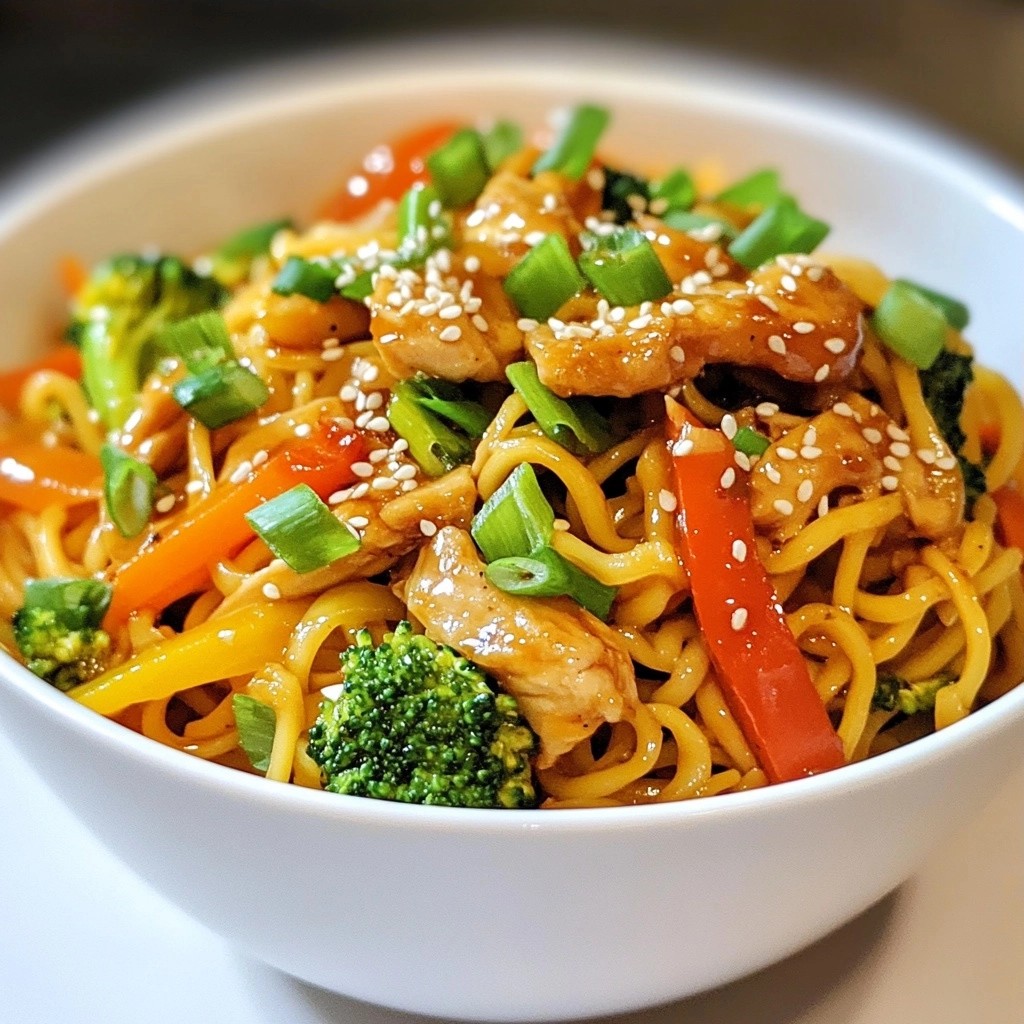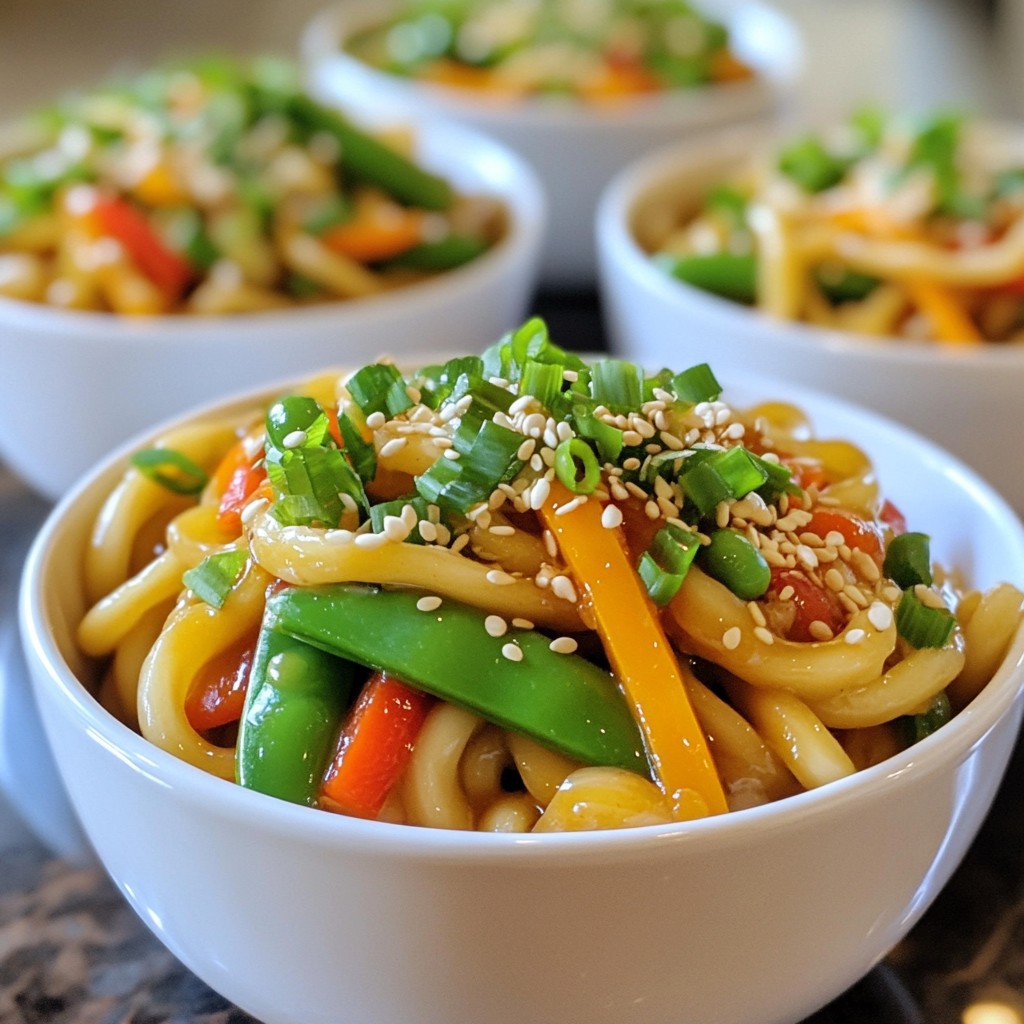
Craving a warm, hearty meal that’s easy to make? Dive into my Savory Soy Ginger Udon Delight! This dish combines fresh ingredients with rich flavors, creating a satisfying experience. Packed with udon noodles, vibrant veggies, and the perfect blend of soy sauce and ginger, it promises comfort in every bite. Ready to whip up this tasty noodle dish? Let’s get cooking!
Why I Love This Recipe
- Quick and Easy: This recipe comes together in just 20 minutes, making it perfect for busy weeknights or a quick lunch.
- Flavorful and Savory: The combination of soy sauce, ginger, and garlic creates a rich, umami-packed flavor that is utterly satisfying.
- Colorful and Nutritious: With vibrant vegetables like snap peas, bell pepper, and carrots, this dish is not only beautiful but also packed with nutrients.
- Customizable: You can easily add your favorite protein, such as tofu or chicken, to make this dish even more hearty.
Ingredients
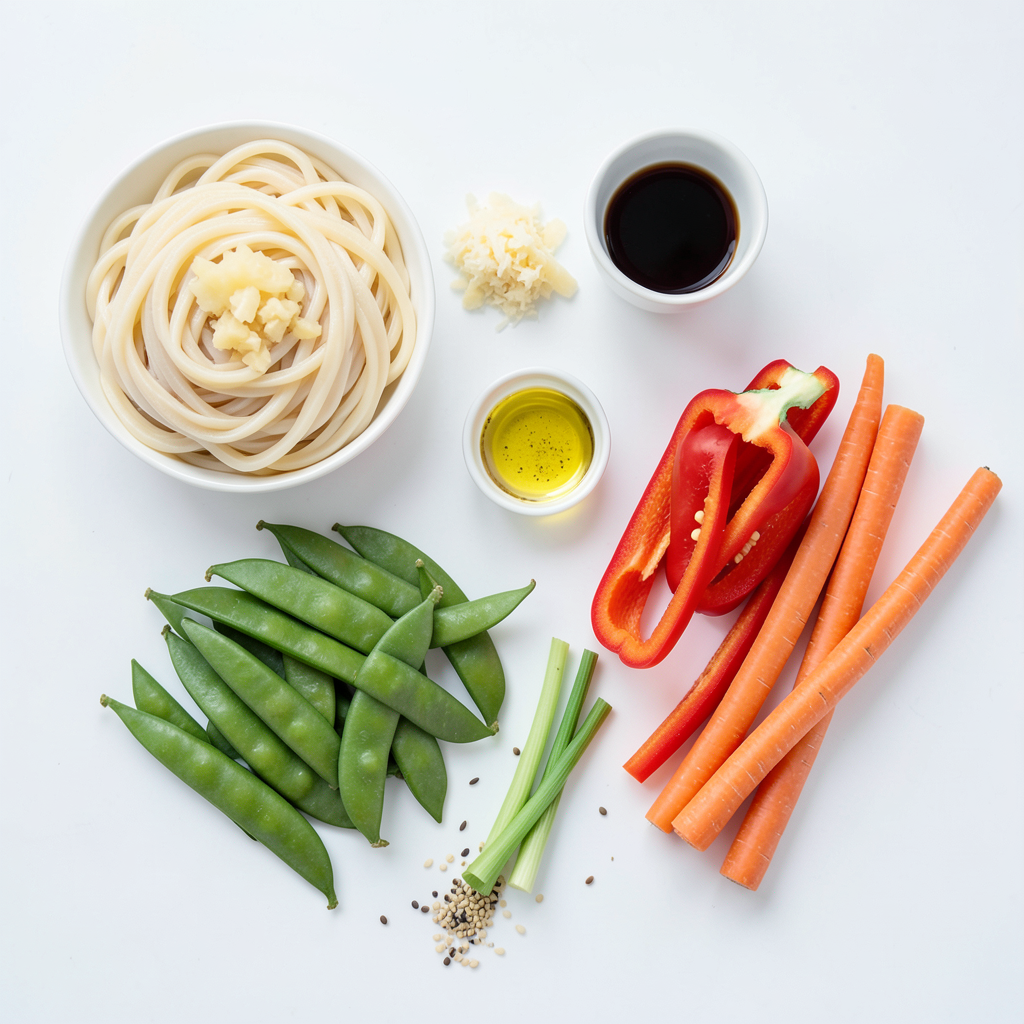
Complete List of Ingredients
- 200g udon noodles
- 2 tablespoons soy sauce
- 1 tablespoon freshly grated ginger
- 2 cloves garlic, minced
- 1 tablespoon sesame oil
- 1 cup snap peas, trimmed
- 1 red bell pepper, julienned
- 1 carrot, julienned
- 2 green onions, chopped
- 1 tablespoon sesame seeds (optional)
- Salt and pepper to taste
Gather these ingredients before you start cooking. Udon noodles are the star here. They provide a chewy texture that pairs well with the sauce. Soy sauce adds depth and umami, while ginger gives a fresh kick. Garlic enhances the overall flavor, making it more savory.
Snap peas, red bell pepper, and carrot add color and crunch. I love the bright look they bring to the dish. Green onions add a mild onion flavor and a pop of green. Sesame seeds are optional but add a nice touch if you use them.
Make sure to have salt and pepper ready for any last-minute seasoning. This simple list is key to creating a delicious and hearty meal.
Step-by-Step Instructions
Cooking the Udon Noodles
To start, you need to cook the udon noodles. First, bring 4-5 cups of water to a rolling boil. This step is key to getting the noodles just right. Once the water is boiling, add the udon noodles. Cook them for about 8-10 minutes. They should be tender but still firm to the bite. After cooking, drain the noodles in a colander and set them aside.
Preparing the Stir-Fry Base
Next, we move on to the stir-fry base. In a large skillet or wok, heat 1 tablespoon of sesame oil over medium heat. Once the oil is hot, add 2 cloves of minced garlic and 1 tablespoon of freshly grated ginger. Stir these for about 30 seconds. You want to see the garlic turn golden and smell its lovely aroma.
Incorporating Vegetables
Now, it’s time to add the veggies! Toss in 1 cup of snap peas, 1 julienned red bell pepper, and 1 julienned carrot. Cook all of these for about 3-4 minutes. Stir frequently to keep the veggies vibrant and slightly tender but still crisp. This will help maintain their natural crunch.
Combining Noodles and Sauce
Once the veggies are ready, it’s time to combine everything. Add the drained udon noodles to the skillet. Pour in 2 tablespoons of soy sauce. Gently toss the noodles and vegetables together using tongs or a spatula. Make sure everything gets nicely coated in the savory sauce. Cook this for another 2-3 minutes to heat everything through evenly.
Final Seasoning and Garnishing
Finally, taste your dish! Adjust the flavor with salt and pepper to your liking. Once everything is well combined and hot, take the skillet off the heat. Just before serving, sprinkle chopped green onions and sesame seeds over the top. This adds a fresh crunch and makes the dish look amazing. Enjoy your Savory Soy Ginger Udon!
Tips & Tricks
Perfecting the Udon Texture
To get the best udon noodles, cook them al dente. This means they should be firm but not hard. Follow the package time closely, usually around 8-10 minutes. Check them a minute or two early, as they can overcook quickly.
After cooking, draining is key. Use a colander to let the water run off well. Avoid rinsing the noodles. This keeps the starch that helps sauce stick.
Enhancing Flavor
Want to add more flavor? You can try a splash of rice vinegar or chili paste. Both give a nice kick without overpowering the dish. If you want to switch sesame oil, use olive oil or coconut oil for a different taste. They both work well with the other ingredients.
Presentation Tips
Serving matters! Use deep bowls to show off your udon. This makes each serving look inviting. For garnish, sprinkle chopped green onions on top. A light sprinkle of sesame seeds adds crunch and beauty. Drizzling a bit of sesame oil just before serving gives it a final touch of flavor. Enjoy!
Pro Tips
- Fresh Ingredients: Using fresh vegetables will enhance the flavor and texture of your dish. Look for vibrant snap peas and firm bell peppers.
- Perfect Noodle Texture: Be careful not to overcook the udon noodles. They should be tender but still have a slight bite to them for the best texture.
- Customize Your Veggies: Feel free to add or substitute other vegetables based on your preference or what you have on hand, such as broccoli or bok choy.
- Enhance with Toppings: For added flavor, consider serving with a drizzle of sriracha or a sprinkle of crushed red pepper flakes for a spicy kick.
Variations
Protein Additions
You can easily add protein to your Savory Soy Ginger Udon. Chicken, shrimp, or tofu work well. For chicken, use bite-sized pieces and cook them first. Shrimp cooks quickly, so add it just before the noodles. Tofu can be cubed and sautéed until golden. Each protein adds its unique flavor and texture.
Vegetable Substitutions
Feel free to switch up the veggies in this dish. Broccoli, bok choy, or mushrooms can add great taste. Carrots and snap peas are great, but try bell peppers or zucchini for a change. You can also use seasonal veggies for freshness. Always pick what looks best at the market.
Gluten-free Options
If you need gluten-free options, try rice noodles instead of udon. They cook quickly and have a nice texture. For sauces, use tamari or coconut aminos as soy sauce substitutes. These options keep the dish tasty while meeting dietary needs. Enjoy your noodles without worries!
Storage Info
How to Store Leftovers
To keep your savory soy ginger udon fresh, follow these steps:
- Let the dish cool down to room temperature.
- Transfer leftovers to an airtight container.
- Store in the refrigerator for up to 3 days.
This method helps maintain the flavor and texture of the noodles and veggies.
Reheating Recommendations
When reheating, avoid sogginess to keep the dish enjoyable. Here are my tips:
- Use a skillet over medium heat.
- Add a splash of water or broth to create steam.
- Stir gently until heated through.
This method warms the dish evenly without making it mushy.
Freezing Udon Dishes
Freezing udon can be tricky, but it’s possible. Here’s how:
- Cook udon noodles slightly less than usual.
- Allow the dish to cool completely.
- Place in a freezer-safe container.
- Label with the date for easy tracking.
To thaw, move the container to the fridge overnight, then reheat as described above.
FAQs
Can I use regular noodles instead of udon?
Yes, you can use regular noodles. Spaghetti or fettuccine works well. Both can change the dish's taste and texture. Udon has a chewy bite, while spaghetti is less thick. The sauce will still be tasty, but the feel will be different.
What can I substitute for soy sauce?
You can use tamari for gluten-free soy sauce. Coconut aminos is a good choice for a low-sodium option. Both give a nice umami flavor. If you want less salt, mix water with these sauces to taste.
How long do leftovers last?
Leftovers can last for about three days in the fridge. Make sure to store them in an airtight container. Always check for any signs of spoilage before eating. If it smells off, toss it.
Is this dish suitable for meal prep?
Yes, this dish is great for meal prep. Cook the noodles and veggies in advance. Store them separately and combine when ready to eat. Reheat in a skillet or microwave, and add a splash of soy sauce for freshness.
Udon stir-fry is easy and fun to make. We covered ingredients, cooking methods, tips, and variations. You can choose protein and vegetables you like. Storing leftovers is simple, and reheating is quick. This dish fits into your meal prep plan too. Udon is versatile and flavorful. It can suit many tastes. Try this recipe today, and enjoy a tasty, home-cooked meal!