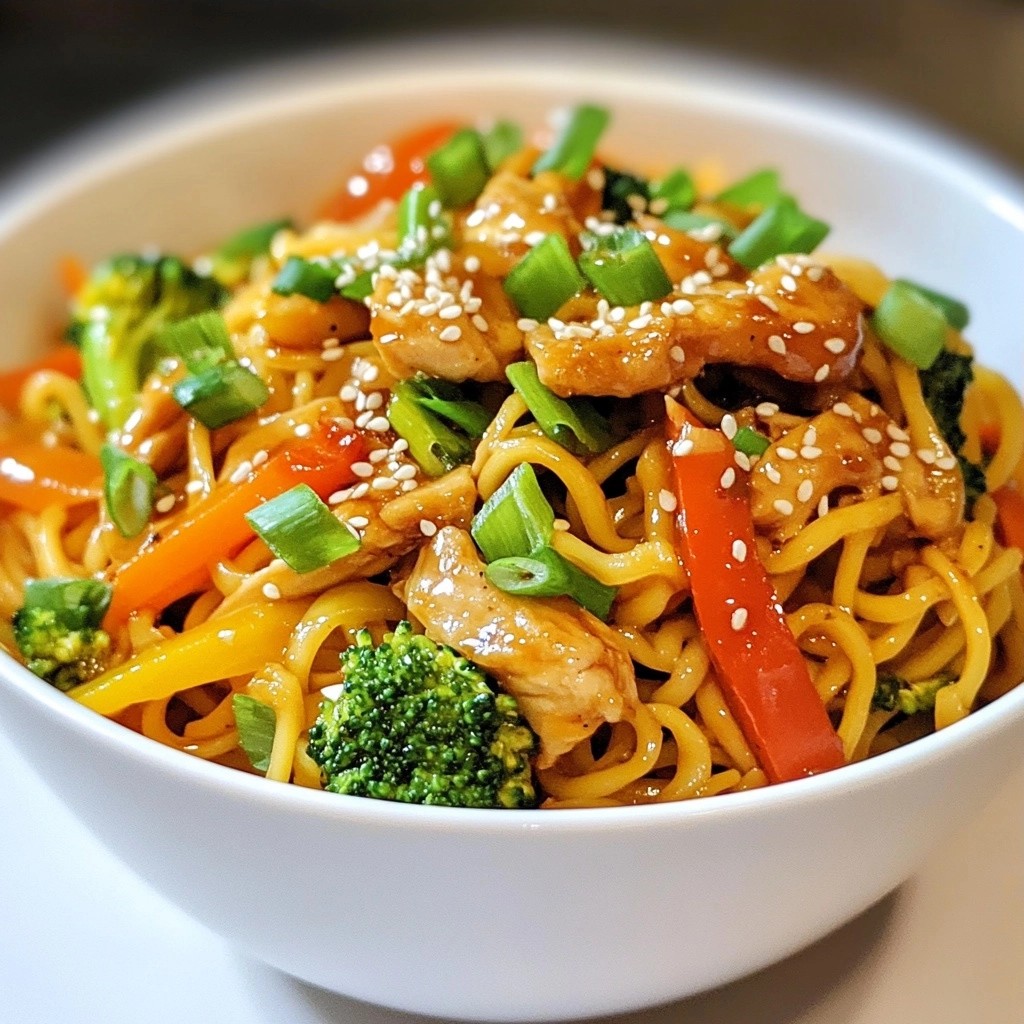
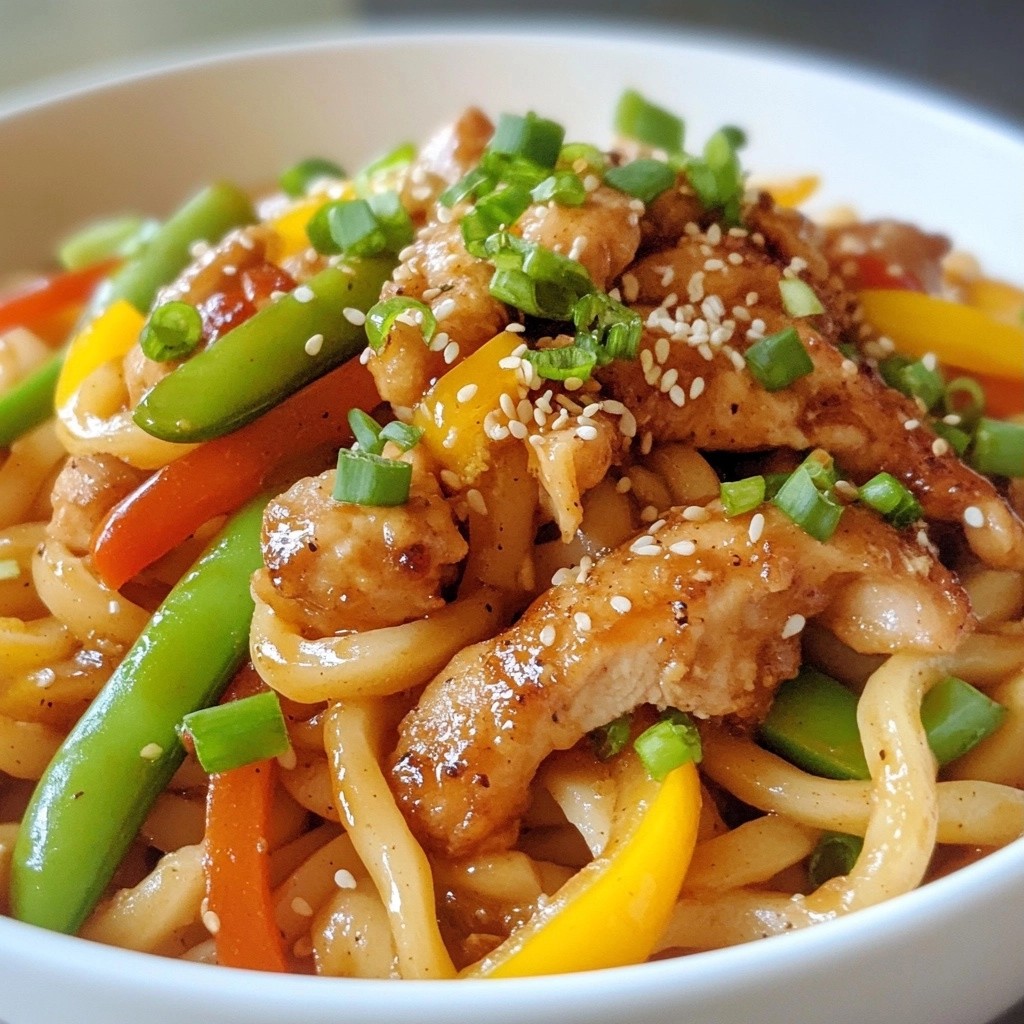
Craving a warm, filling dish? Look no further than my Sesame Ginger Chicken Udon recipe! This hearty noodle dish combines tender chicken, chewy udon noodles, and vibrant vegetables, all coated in a rich sesame-ginger sauce. It's perfect for busy weeknights or any time you want comfort food with a twist. Follow along as I guide you through simple steps and tips to make this delicious meal. Let’s get cooking!
Why I Love This Recipe
- Quick and Easy: This dish can be prepared in just 25 minutes, making it perfect for busy weeknights.
- Flavorful Combination: The sesame oil and ginger create a delightful aroma that complements the chicken and vegetables beautifully.
- Customizable Ingredients: You can easily swap vegetables or protein based on your preferences or what you have on hand.
- Comforting Texture: The udon noodles offer a chewy and satisfying base that pairs perfectly with the tender chicken and crisp veggies.
Ingredients
Main Ingredients
- 300g udon noodles
- 2 boneless, skinless chicken breasts, thinly sliced
- 2 tablespoons sesame oil
Vegetables and Aromatics
- 1 tablespoon fresh ginger, finely grated
- 2 garlic cloves, minced
- 1 bell pepper, julienned (any color you prefer)
- 1 cup snap peas, trimmed
Seasoning Elements
- 2 tablespoons low-sodium soy sauce
- 3 green onions, sliced (green and white parts separated)
- 2 teaspoons sesame seeds, toasted for extra flavor
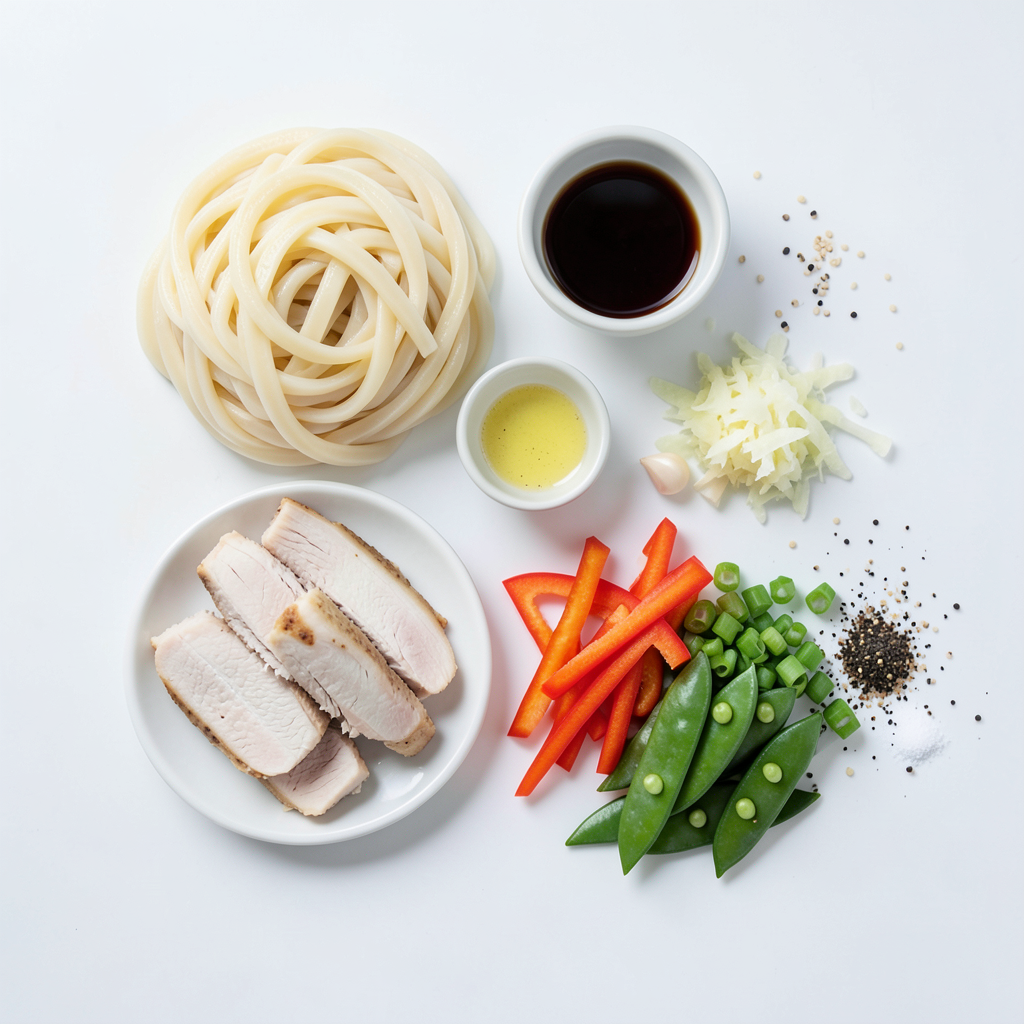
This recipe uses fresh, high-quality ingredients to create a tasty dish. Udon noodles serve as a hearty base. The chicken adds protein and flavor. Sesame oil brings a rich taste that ties everything together. Fresh ginger and garlic add a warm, spicy kick. The bell pepper and snap peas provide crunch and color.
The soy sauce enhances the umami flavor. Green onions add a fresh, mild onion taste. Toasted sesame seeds finish the dish with a nutty crunch. Together, these ingredients create a balanced meal that is both filling and flavorful.
Step-by-Step Instructions
Cooking the Udon Noodles
First, you need to cook the udon noodles. Follow the package instructions carefully. After cooking, drain the noodles and let them sit. This step ensures they do not stick together.
Sautéing the Chicken
Next, heat two tablespoons of sesame oil in a large skillet over medium-high heat. Once the oil shimmers, add the thinly sliced chicken breasts. Season the chicken with salt and pepper. Cook for about 5-7 minutes, stirring often. The chicken should turn golden brown and be fully cooked.
Combining Aromatics and Vegetables
Now, it’s time to add flavor. Toss in the grated ginger and minced garlic. Sauté for one minute until they smell great. Then, add the julienned bell pepper and snap peas. Stir-fry these for 3-4 minutes until they are tender but still crisp.
Mixing the Noodles with the Chicken and Vegetables
Pour in two tablespoons of low-sodium soy sauce over the chicken and veggies. Toss everything to coat well. Next, gently add the cooked udon noodles to the skillet. Mix everything carefully until the noodles are warm and well combined. Taste the dish and add more salt or pepper if needed.
Tips & Tricks
Perfecting the Texture
To get udon noodles just right, follow these steps:
- Cook the noodles in a big pot of boiling water.
- Stir gently to stop them from sticking.
- Check the package for cooking time. Usually, it takes about 8-10 minutes.
- Drain them well, then rinse with cold water. This keeps them from clumping.
When you sauté, remember to heat your skillet or wok first.
- Use medium-high heat for the sesame oil.
- Wait until the oil shimmers before adding chicken. This helps it cook evenly.
Flavor Enhancements
To boost flavor, think beyond soy sauce.
- Try adding a splash of chili sauce for heat.
- A little honey can add sweetness if you like.
- A dash of rice vinegar brings a nice tang.
For garnishes, consider:
- Extra green onions for crunch.
- Toasted sesame seeds for a nutty touch.
- Fresh cilantro adds color and freshness.
Cooking Equipment Suggestions
For stir-frying, a large skillet or wok works best.
- A non-stick skillet prevents sticking and makes cleanup easy.
- If you have a cast iron pan, it gives great heat.
For serving, use deep bowls.
- This keeps the noodles warm and cozy.
- Chopsticks make the meal more fun and authentic.
Pro Tips
- Use Fresh Ingredients: Fresh ginger and garlic will elevate the flavor of your dish significantly. Consider grating the ginger just before use to enhance its aroma.
- Customize Your Vegetables: Feel free to mix and match vegetables based on your preference or what you have on hand. Broccoli, carrots, or baby corn can also be great additions!
- Don’t Overcook the Noodles: Udon noodles should be tender but still have a slight bite. Follow the package instructions closely to achieve the perfect texture.
- Adjust the Sauce to Taste: Depending on your preference for saltiness, you can always add more soy sauce or sesame oil. Just remember to taste as you go!
Variations
Protein Substitutes
You can swap the chicken for shrimp or tofu. Shrimp cooks fast and adds a nice flavor. Just sauté it until pink. Tofu is great for a vegetarian option. Use firm tofu, and make sure to press it to remove excess water. This helps it absorb flavors better.
Vegetable Alternatives
Feel free to use seasonal vegetables. Broccoli, carrots, or zucchini work well. You can also mix in some mushrooms for an earthy taste. Add colorful veggies like red or yellow bell peppers for a vibrant dish.
Flavor Profile Changes
You can change the flavor by adjusting the soy sauce. Add honey for sweetness or chili paste for spice. Use rice vinegar for a tangy twist. Try different oils too. Peanut oil gives a nutty taste, while olive oil provides a lighter flavor.
Storage Info
Refrigeration Guidelines
To store your Sesame Ginger Chicken Udon, let it cool first. Place leftovers in airtight containers. This keeps the dish fresh and safe. I recommend using glass containers for easy reheating. Store in the fridge for up to three days.
Reheating Methods
When you want to enjoy your udon again, reheating is simple. You can use the microwave or stovetop.
- Microwave: Place the udon in a bowl and add a splash of water. Cover with a damp paper towel. Heat for 1-2 minutes, stirring halfway through.
- Stovetop: Heat a pan over medium heat. Add a little sesame oil, then the udon. Stir until it warms through, about 5 minutes.
Freezing Udon
If you want to save your udon for later, freezing works well.
- Tips for freezing: Let the dish cool completely. Divide it into portions and place in freezer bags. Remove as much air as you can to prevent freezer burn.
- Thawing and reheating recommendations: To thaw, place the bag in the fridge overnight. For a quick method, run it under cold water. Once thawed, use the reheating methods mentioned above to enjoy your meal.
FAQs
Can I use other types of noodles?
Yes, you can use other noodles. Udon noodles are thick and chewy. They hold sauce well. You can replace udon with soba, rice noodles, or even spaghetti. Soba noodles bring a nutty taste. Rice noodles are gluten-free and light. Spaghetti is an easy option if you have it on hand. Each type offers a unique texture and flavor, so feel free to experiment!
How can I make this recipe gluten-free?
To make this dish gluten-free, swap regular soy sauce for tamari or coconut aminos. Both options taste great and work well. Use gluten-free udon noodles or rice noodles. Ensure all other ingredients, like sesame oil and chicken, are gluten-free. You can enjoy this meal without worry about gluten sensitivity.
What can I serve with Sesame Ginger Chicken Udon?
You can serve many sides with this dish. A simple green salad with sesame dressing pairs well. Steamed broccoli or bok choy adds freshness and color. For beverages, try green tea or a light beer. These drinks balance the flavors in the meal. Don’t hesitate to mix and match your favorites!
This blog post covered a tasty sesame ginger chicken udon recipe. You learned about the key ingredients, like udon noodles and fresh veggies. We shared step-by-step cooking instructions and helpful tips for perfecting your dish. Plus, we explored variations for different dietary needs and storage methods for leftovers.
In the end, making this dish is easy and fun. You can adjust flavors and ingredients to fit your taste. Enjoy creating your own version of this yummy meal!