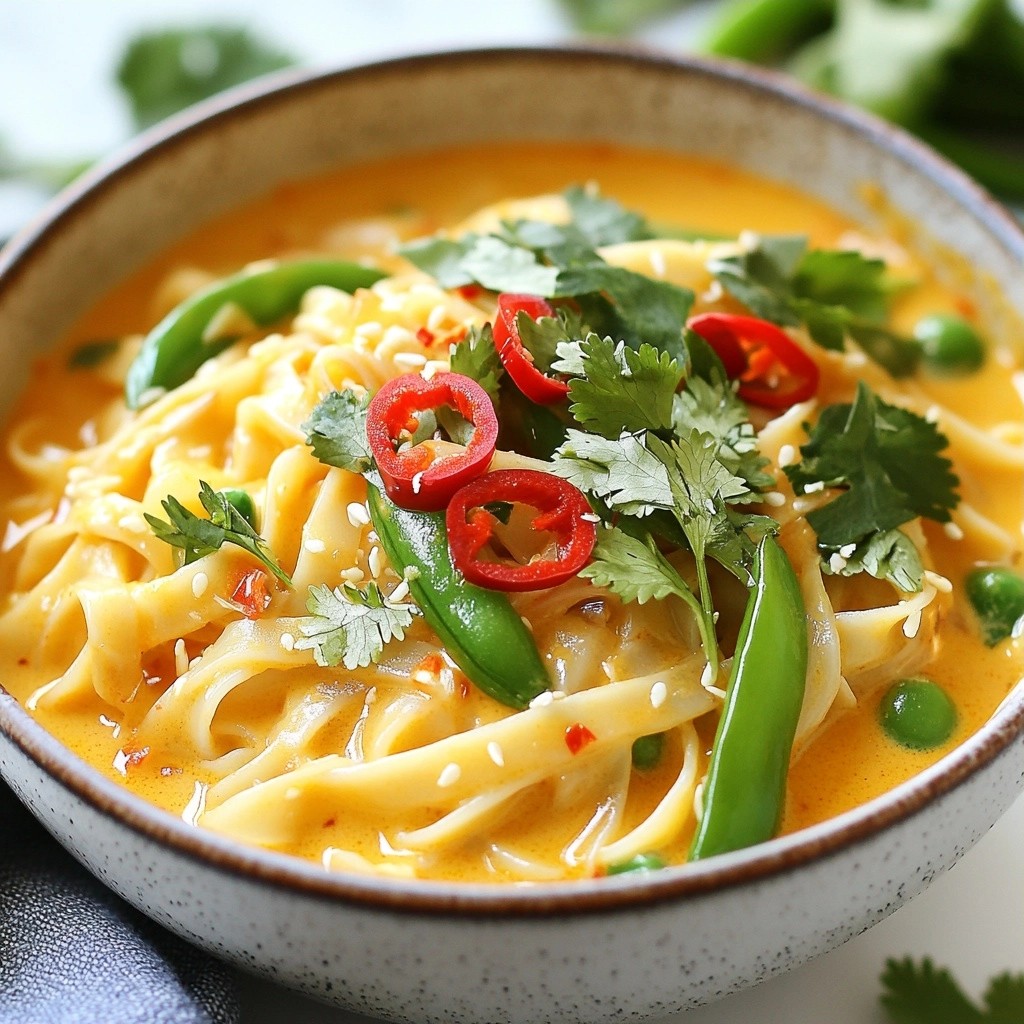
If you love bold flavors and hearty meals, you’ll adore my Spicy Thai Coconut Curry Noodles. This dish blends creamy coconut milk with zesty spices for a warm hug in a bowl. Whether you’re a novice cook or a kitchen pro, I’ll guide you through each step. From fresh ingredients to tasty variations, you’ll be ready to impress everyone at your table. Let’s dive into making this delicious meal together!
Why I Love This Recipe
- Bold Flavors: This recipe combines the rich creaminess of coconut milk with the heat of red curry paste, creating a harmonious balance that excites the palate.
- Quick and Easy:
- Customizable: Feel free to add your favorite vegetables or protein, making it versatile and suited to your preferences.
- Garnish for the Win: Fresh cilantro and optional red chili not only enhance the dish visually but also add a fresh, zesty finish to every bite.
Ingredients
Complete Ingredients List
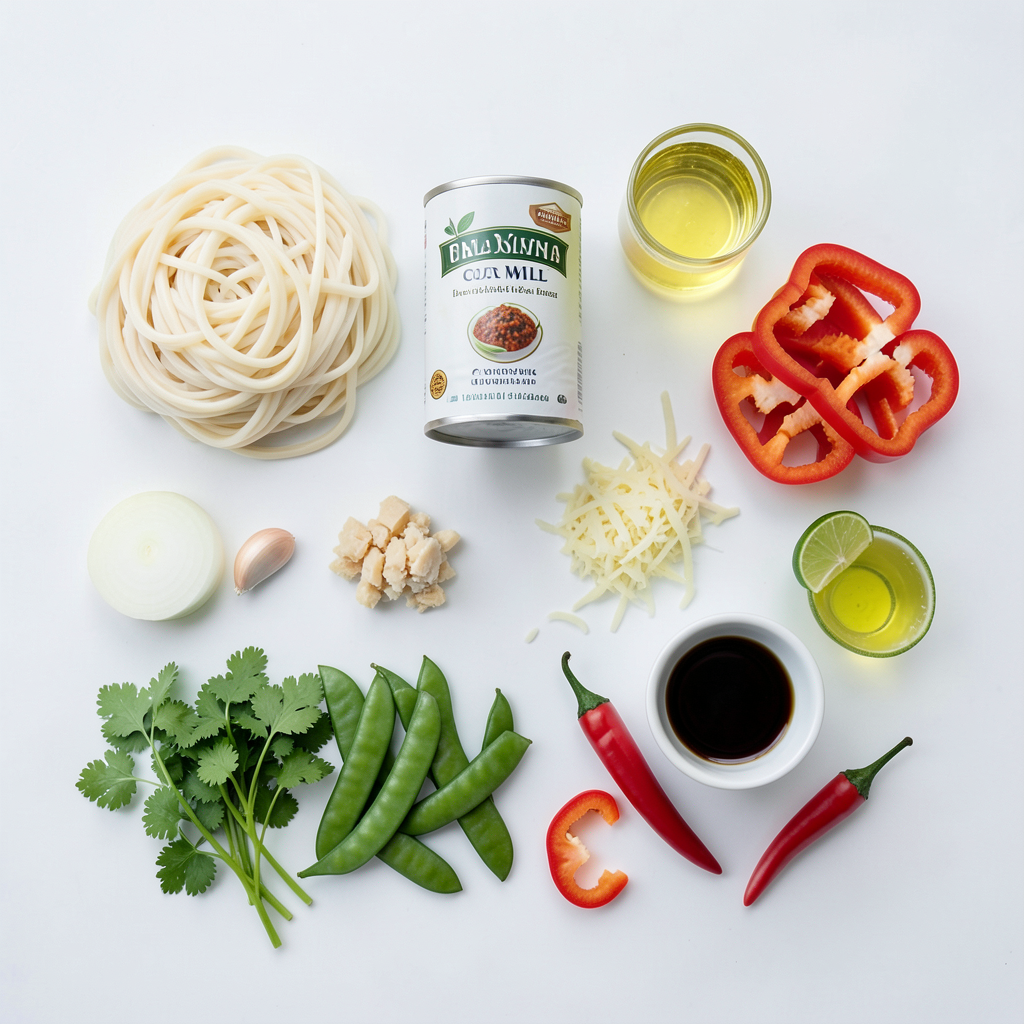
To make the Spicy Thai Coconut Curry Noodles, you will need:
- 200g rice noodles
- 1 can (400ml) coconut milk
- 2 tablespoons red curry paste
- 1 tablespoon vegetable oil
- 1 medium onion, thinly sliced
- 3 cloves garlic, minced
- 1-inch piece of ginger, grated
- 1 red bell pepper, thinly sliced
- 1 cup snap peas
- 2 tablespoons soy sauce
- 1 tablespoon lime juice
- Fresh cilantro, for garnish
- Sliced red chili, for garnish (optional)
- Salt and pepper to taste
Ingredient Substitutions
You can swap some ingredients if needed:
- Instead of rice noodles, try egg noodles or quinoa for a different taste.
- Use light coconut milk for fewer calories, but it may be less creamy.
- If you don't have red curry paste, yellow curry paste works too.
- For a vegan option, ensure your soy sauce is gluten-free and plant-based.
- Snap peas can be replaced with green beans or broccoli if desired.
Tips for Fresh Ingredients
Using fresh ingredients makes your dish taste better:
- Look for bright, vibrant vegetables; they will be more flavorful.
- Choose a can of coconut milk that is full-fat for creaminess.
- Fresh ginger gives a nice zing. Check for firmness when selecting.
- Store fresh herbs like cilantro in water to keep them fresh longer.
- Use lime juice from a fresh lime for the best flavor, not bottled juice.
Step-by-Step Instructions
Cooking the Noodles
First, I cook the rice noodles. I follow the package instructions for the best results. Once they are cooked, I drain them well. I set them aside for later use.
Preparing the Curry Base
Next, I heat vegetable oil in a large pan over medium heat. When the oil shimmers, I add the thinly sliced onion. I sauté it for 3 to 4 minutes until it turns soft and slightly golden.
After that, I add minced garlic and grated ginger to the pan. I sauté these for 1 to 2 minutes. This step lets them release their wonderful aroma. Then, I stir in the red curry paste. I let it cook for about 1 minute to blend all the flavors.
Now, I pour in the coconut milk slowly while stirring. I bring the mixture to a gentle simmer, careful not to let it boil too hard. Once simmering, I add the sliced red bell pepper and snap peas. I cook these for 5 to 7 minutes until they are tender but still crunchy.
Combining Noodles with Curry
Next, I season the curry with soy sauce and lime juice. I taste it and adjust with salt and pepper as needed.
Then, I fold in the cooked rice noodles into the curry sauce. I gently mix until the noodles are well coated. I let everything heat through for another 2 to 3 minutes.
Finally, I remove the pan from heat. I serve the noodles hot, garnished with fresh cilantro and optional sliced red chili for extra spice. Enjoy your meal!
Tips & Tricks
Making It Spicier
To add more heat, try using extra red curry paste. You can also add sliced red chili peppers. If you love spice, keep some chili flakes handy for serving. Adjust the spice level based on your taste, and don’t be afraid to experiment.
Ensuring Perfectly Cooked Vegetables
The key to great vegetables is timing. Start with the onion and let it soften first. Then, add garlic and ginger for flavor. Finally, add the red bell pepper and snap peas. Cook them until they are tender but still crisp. This keeps the colors bright and the nutrients intact.
Customizing for Dietary Preferences
You can adapt this recipe easily. If you want a vegan dish, ensure your red curry paste is dairy-free. For gluten-free options, use tamari instead of soy sauce. You can also swap rice noodles for zucchini noodles or other gluten-free noodles. This dish is flexible to fit many diets.
Pro Tips
- Adjust the Spice Level: If you prefer a milder curry, start with less red curry paste and gradually add more to taste. You can also remove the seeds from the red chili for less heat.
- Use Fresh Ingredients: Fresh herbs and vegetables enhance the flavor of your dish. Try to use fresh cilantro and seasonal vegetables for the best results.
- Perfectly Cooked Noodles: Avoid overcooking the rice noodles. They should be al dente before mixing them into the curry, as they will continue cooking in the hot sauce.
- Garnish for Flavor: Don’t skip the garnish! Fresh cilantro and a squeeze of lime not only enhance the presentation but also add a burst of flavor that complements the curry.
Variations
Protein Additions (Chicken, Tofu, Shrimp)
You can add protein to your Spicy Thai Coconut Curry Noodles in many ways. Chicken is a great choice. Use bite-sized pieces and cook them in the pan before adding the other ingredients. Tofu is a fantastic option for a plant-based meal. Cut it into cubes and sauté until golden. Shrimp also works well. Just add them during the last few minutes of cooking. Each protein adds its own flavor and texture.
Vegetable Variations (Broccoli, Carrots, etc.)
Feel free to mix in different vegetables. Broccoli adds a nice crunch. Cut it into small florets and add it with the snap peas. Carrots bring sweetness and color. Slice them thinly and toss them in early with the onions. You can also try bell peppers, zucchini, or spinach. The more colorful your dish, the more fun it will be to eat!
Gluten-Free and Vegan Options
If you want a gluten-free meal, use rice noodles, which are naturally gluten-free. Check your soy sauce label and choose a gluten-free version. For a vegan dish, use tofu or vegetables as your protein source. Make sure the red curry paste doesn’t contain fish sauce. This way, you can enjoy a hearty, flavorful meal that fits your dietary needs.
Storage Info
Proper Storage Techniques
To keep your Spicy Thai Coconut Curry Noodles fresh, start by letting them cool. Place them in an airtight container. This will help prevent moisture loss. You can store your noodles and sauce together or separately. If you want them to keep their texture, store noodles and sauce apart.
Reheating Instructions
When you are ready to enjoy your leftovers, reheat them gently. Use a pan on low heat for best results. Add a splash of water or coconut milk to help them warm evenly. Stir often to avoid sticking. You can also microwave them, but do so in short bursts, stirring in between.
How Long It Lasts
If stored properly, your Spicy Thai Coconut Curry Noodles can last for about 3 to 5 days in the fridge. Always check for any off smells or changes in texture before eating. For longer storage, consider freezing them. However, the texture may change slightly after freezing.
FAQs
What type of noodles work best?
I love using rice noodles for this dish. They soak up the sauce well. Other options include egg noodles or udon. Each type brings a unique texture. Choose what you prefer or have on hand.
Can I freeze Spicy Thai Coconut Curry Noodles?
Yes, you can freeze these noodles. Just store them in an airtight container. They can last up to three months in the freezer. When ready to eat, thaw them in the fridge overnight. Reheat gently on the stove.
What’s a good side dish to serve with this recipe?
A fresh salad pairs nicely with the noodles. Try a simple cucumber salad with lime dressing. You could also serve spring rolls on the side. They add crunch and balance the meal.
You can create tasty Spicy Thai Coconut Curry Noodles by following the steps shared. We covered ingredient lists, cooking methods, and tips to make it your own. Don't forget to customize with proteins and veggies. Store leftovers correctly to keep them fresh. With this guide, you can enjoy a delightful meal anytime. Experiment and have fun in your kitchen!